















For the first few months of training, you might get away with picking and choosing exercises as you please, But if you’re after real progress, then using compound and isolation exercises correctly could help you reach those physique or strength goals a whole lot quicker.
It’s time to start programming your workouts in a way that works–and this article will give you the fundamentals to do so. Covering what compound vs isolation exercises are, the benefits of each, and how to use them effectively within your workout.
This may just be the missing key you need to build an effect program that builds real results: Get ready for everything you need to know about compound and isolation exercises.
Muscle fit tshirts that show off your gains in all the right places after pull day; seamless leggings that withstand the heaviest deadlifts; and knee sleeves and straps just help out just when you need them–You bring your A game, we bring the lifting gear.
What Is The Difference Between Compound And Isolation Exercises?
The key difference between a compound and isolation exercise is the number of joints involved in the movement and, therefore, the volume of muscle groups involved too:
Compound exercises involve multiple joints to target multiple muscles.
Isolation exercises are hyper-focused on a single muscle group using a single joint movement.
What Are Compound Exercises?
Compound exercises involve multiple joints to target multiple muscles, building strength across functional movements that translate directly to real-life activities.
An example of a compound exercise would be;
A back squat, where movement in the ankles, knees, and hips, along with engaging numerous muscle groups, are all required to execute the lift.
What Are The Best Compound Exercises?
The best compound exercise can vary depending on your goals. However, the compound movements below would generally be considered fundamental exercises in the gym. They replicate real-life functional movements to build strength and resilience in everyday movements.
Some of the best compound exercises include;
Deadlift
Back Squat
Front Squat
Bench Press
Push Press
What Are Isolation Exercises?
Isolation exercises are hyper-focused on a single muscle group using a single joint movement. Lately, isolation exercises have received a lot of criticism, falling out of favor with many because they are less ‘functional’ than their compound counterparts.
However, isolation exercises still have their benefits, which (depending on your goal) mean they can still serve their place in a workout plan by helping to improve muscular imbalances and accelerate hypertrophy within a particular muscle group.
An example of an isolation exercise would be;
The hamstring curl, where the only moving joint is the knee, and the isolated muscle group is the hamstrings. This allows a more targeted approach to training, placing a key focus on the hamstrings.
What Are The Best Isolation Exercises?
The best isolation exercises can vary depending on your goals and the muscles you want to target. If building bigger arms is your goal, then barbell bicep curls may be your isolation exercise of choice.
We've highlighted a few popular examples of isolation exercises and the areas/muscles they target below;
Prone Hamstring Curl (hamstrings)
Seated Leg Extension (quadriceps)
Lateral Shoulder Raise (shoulders)
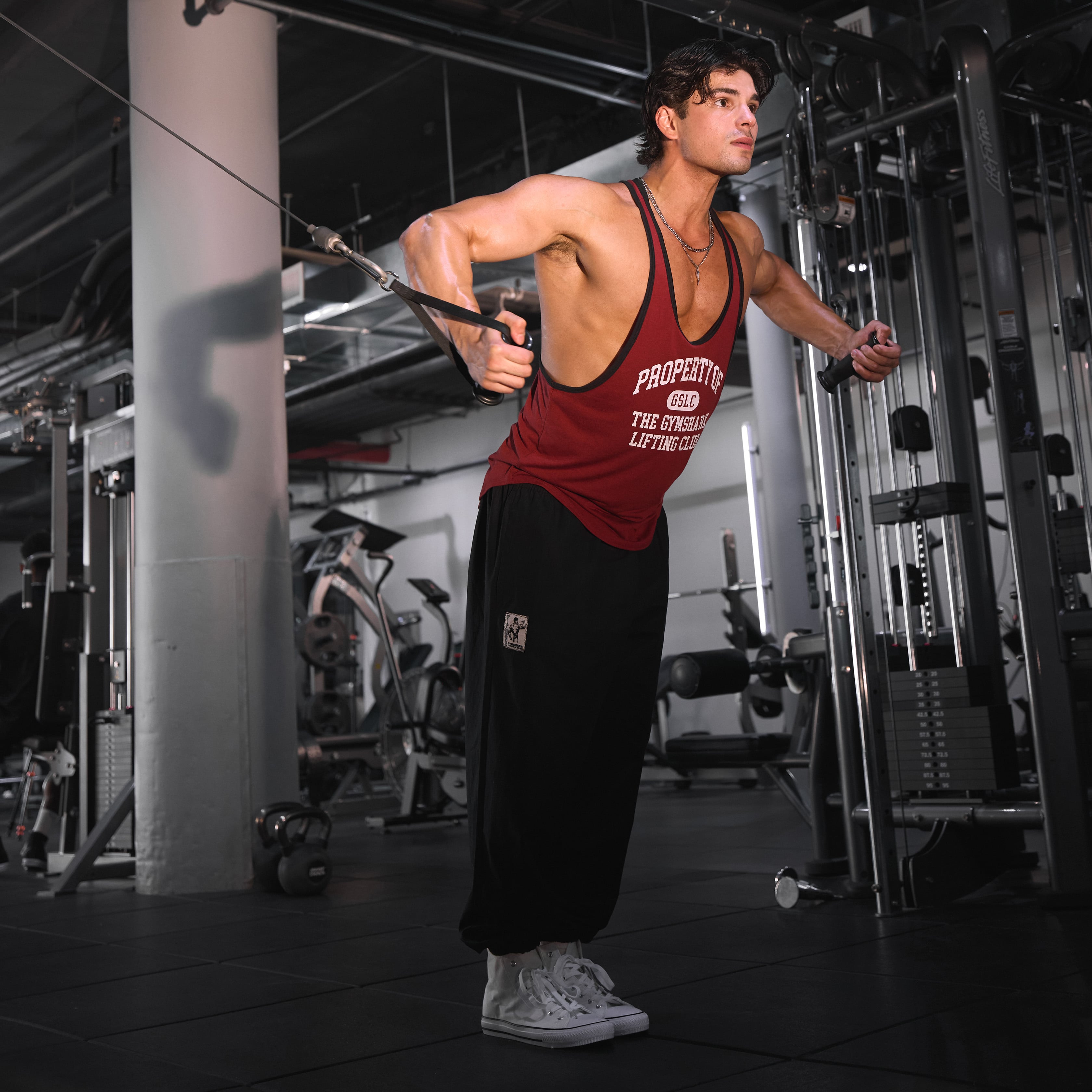
Cable Chest Fly (chest)
Barbell Bicep Curl (biceps)
What Are The Benefits Of Compound Exercises?
Compound exercises are a great way of building strength through functional movement, with multiple muscle groups and joints involved during the lift.
Benefits of compound exercises include:
Improve strength through functional, real-life movements
Time efficient training
Improved coordination, flexibility, and mobility
Promotes muscle growth
Burns more calories
Are There Any Drawbacks Of Compound Exercises?
While training more muscles might seem like it comes without any negatives if you are looking at targeting and growing a specific muscle or muscle group, then compound exercises may not be enough.
As mentioned before, during compound movements, secondary muscles can help take the load, which can mean that the muscle you’re actually targeting gets a little lazy.
Our bodies are smart, and when one muscle group begins to fatigue thnn other secondary muscles will try to compensate. Reducing the ability to train a muscle group to its max through compound exercises. And that's when utilizing isolation exercises has its benefits.
What Are The Benefits Of Isolation Exercises?
Isolation exercises are great for targeting specific muscle groups, and some of the benefits of isolation exercises include;
Hypertrophy specific training
Target individual muscle groups effectively
Working on muscular imbalances
Recovering from injury
Isolating one muscle group can help achieve hypertrophy within that target muscle, potentially leading to an increase in muscle strength and size.
By focusing all of the load on one muscle group, no secondary muscles take over and make that target muscle group's life any easier—meaning total training volume can be increased and measured.
If you’re looking at building bigger quads, you might find that while squatting, your hamstrings and glutes help lift the weight, eliminating the possibility of focusing purely on volume through your quadriceps.
By including isolation exercises, such as the leg extension, you can place more emphasis on your quadriceps.
But remember, you're best hitting some compound exercises first before moving on to isolation exercises.
Are There Any Drawbacks Of Isolation Exercises?
Due to the fact you’re only working one muscle group, you’re likely to be using much lower weights than if multiple muscle groups were being recruited, therefore building less overall strength.
And then we have the functional movement aspect. How often in day-to-day life does a movement only require one muscle group? Not very often. Therefore, the transferability of strength developed as the result of isolation exercises will be less efficient in compound and functional movements.
FAQs
Why Are Compound Exercises Important In Your Exercise Routine?
Compound exercises help build strength, mobility, and stability across a wide range of real-life movements. Developing these factors can help improve the quality of life and reduce the risk of injury.
For example;
Learning how to deadlift will give you the force and strength to safely lift heavy objects up off the floor, such as heavy boxes.
Developing strong overhead strength through a pressing movement could translate into reaching for heavy objects off a shelf or lifting your child above your head.
Building strength across functional movement through the use of compound exercise should be a priority within your training routine.
Is It Better To Do Compound Or Isolation Exercises?
This is entirely up to you, your goals, and your training plan–but if you were going to pick one or the other, we would recommend including compound exercises in your workouts. These will help you build overall strength more quickly, and they will also burn more calories (due to high energy expenditure) and have better carry over to day to day activities (making you fitter not only in the gym, but outside of it, too).
A study by Applied Physiology Nutrition and Metabolism on 29 untrained men interestingly found that a program of only compound exercises achieved the same gains in muscle size and strength as a program of compound and isolation exercises combined after 10 weeks–suggesting no additional benefits to including isolation exercises in their training.
Should You Do Compound Or Isolation Exercises First?
Compound moves are fatiguing, requiring your whole body to engage to shift the weight. For this reason, you should always start your workout with your compound exercises. Then, you can move on to isolation movements, which are less taxing on the body but allow you to focus on specific muscles you want to grow.
How Many Compound Exercises Should You Do Per Workout?
With compound exercises engaging more muscle groups, they require more energy and therefore are typically placed toward the start of your workout - where you feel the strongest.
Aiming for one to two compound lifts in your workout as a beginner is a great place to start, moving towards two or three compound lifts as your body adapts and is able to recover between sessions efficiently.
Is It Ok To Only Do Isolation Exercises?
It isn’t necessarily wrong. However, compound lifts promote overall strength that might be hard (or take a lot longer) to achieve doing just isolation exercises. Compound lifts are a very time-efficient way of exercising, allowing you to work multiple muscles simultaneously rather than one by one using isolation exercises.
Compound exercises are also functional, meaning they mimic real-life activities, helping you train for life (not just looking good in the gym–although we do want that, too, which compound lifts will give you). Ideally, you should combine isolation exercises with compound exercises rather than solely focusing on isolation movements.
Final Words
Knowing the difference between compound vs isolation exercises could be game changer to your workouts. Skip your compound exercises and you could be missing out on movements that active a whole host of muscle groups in a short amount of time.
Rush over your isolation exercises, and you could be skipping a shortcut to hypertrophy (in some cases).
Use the two in the wrong order and you risk missing out on gains, not reaching those heavy numbers and worse, getting injured.
Decide where you goals lie, what your training preferences are, and plan a workout that’s most effective for you.
References:
Gentil, P., Soares, S.R.S., Pereira, M.C., Cunha, R.R. da, Martorelli, S.S., Martorelli, A.S. and Bottaro, M. (2013). Effect of adding single-joint exercises to a multi-joint exercise resistance-training program on strength and hypertrophy in untrained subjects. Applied Physiology, Nutrition, and Metabolism, 38(3), pp.341–344. doi:https://doi.org/10.1139/apnm-2012-0176.